You are here: Home | For businesses | Industries | Energy
Energy
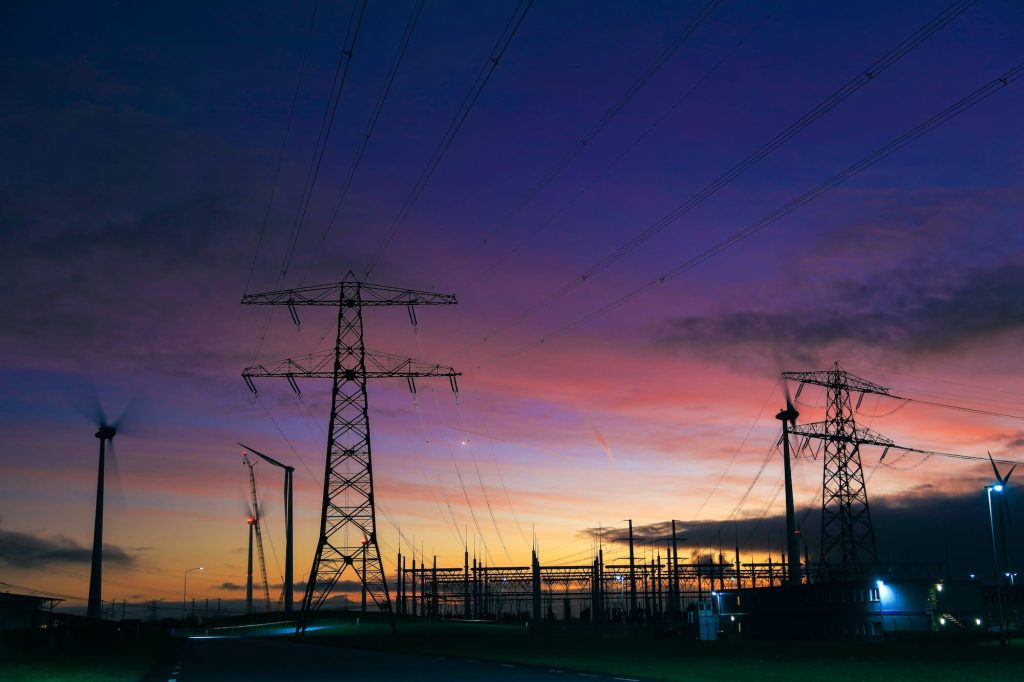
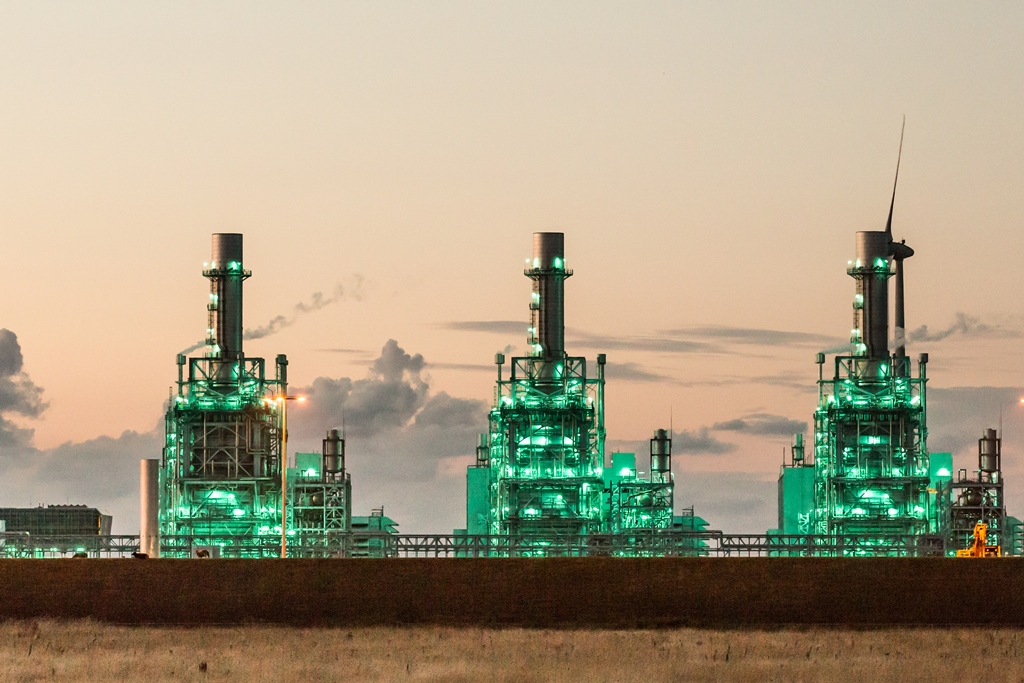
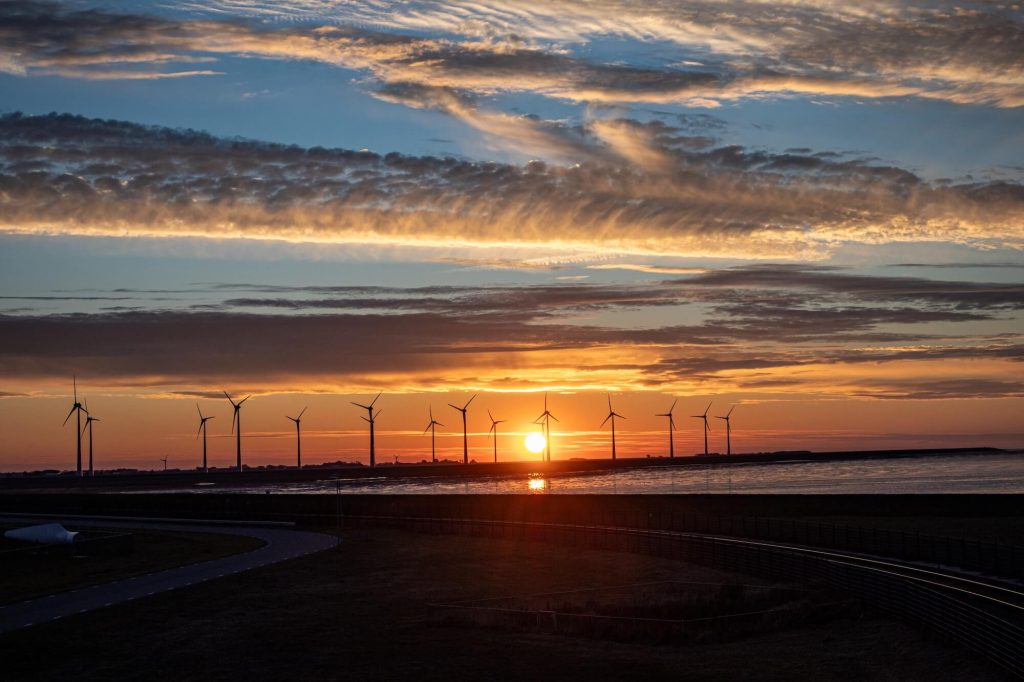
With an installed capacity of 8000 MW, Eemshaven can supply around a third of the Netherlands with electricity. That makes Eemshaven an energy port of note. Major energy producers operate three power stations and there are 112 wind turbines on land in and around Eemshaven. Eemshaven also plays a prominent role in the development of wind farms at sea
during their construction and the subsequent maintenance of the wind turbines. Eemshaven is an important energy hub with direct submarine high-voltage connections with Norway and Denmark. The port also houses various solar parks, and is an extremely suitable site for the future production of green hydrogen. Since 2022, an LNG terminal (liquid natural gas) has been operational in Eemshaven.
LNG terminal Eemshaven
Due to the need for secure gas supplies and reduced dependence on Russian gas, Gasunie subsidiary EemsEnergyTerminal developed a floating LNG terminal in Eemshaven. Since early September 2022, the so-called FRSUs (Floating Storage Regasification Units) Energos Igloo and Eemshaven LNG together form this LNG terminal. This makes it possible to carry liquid natural gas by ship to Eemshaven, where this plant converts into gas again. Once that has happened, the gas can be transported through the gas pipe network. In future, the EemsEnergyTerminal will be able to import green hydrogen.
Offshore wind
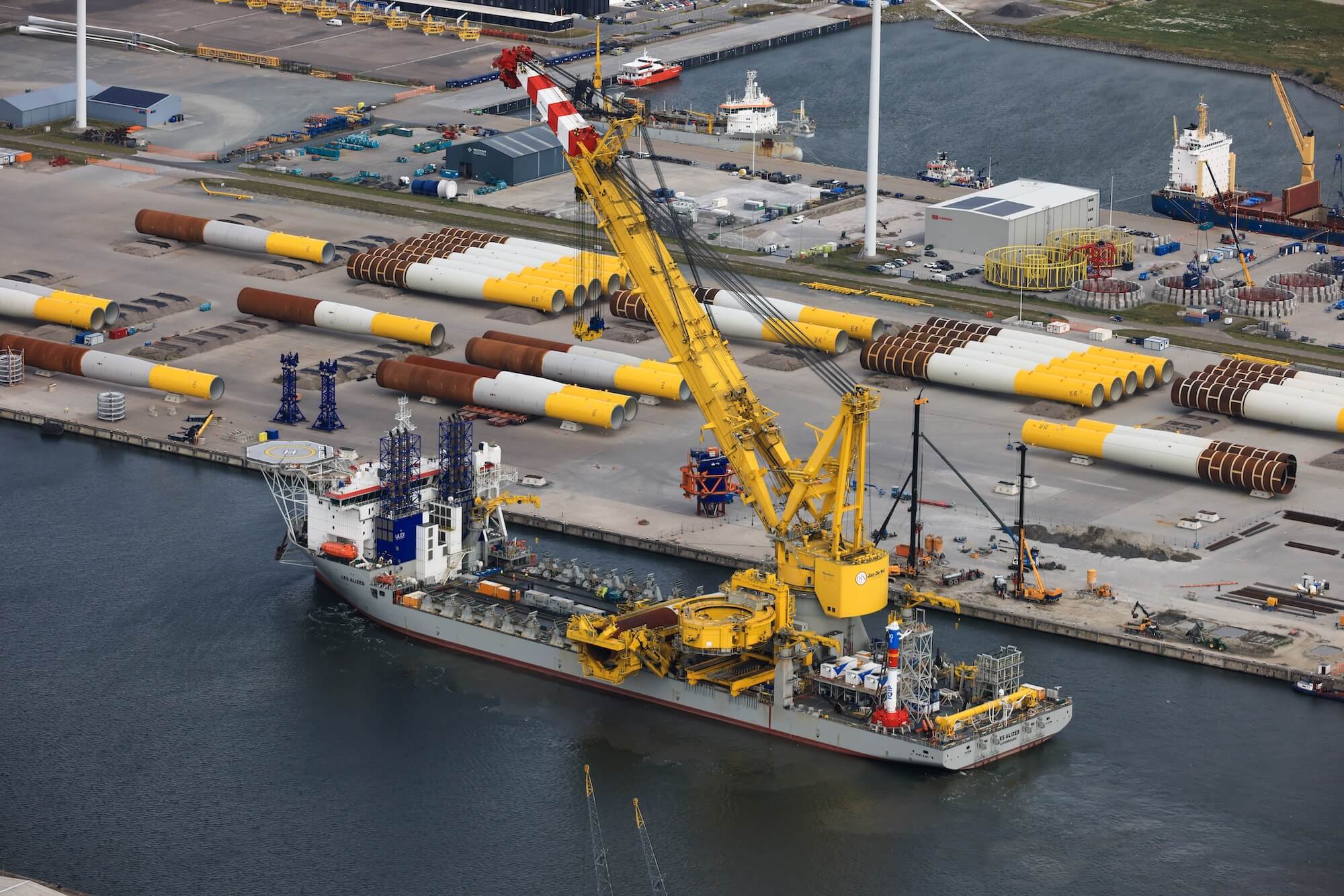
Eemshaven breathes offshore wind. In recent years, the port has become a base and service port for an offshore wind industry of note. Since 2009, Eemshaven has played a leading role in the assembly and logistics handling of wind turbines. This has led to an impressive track record of wind farms that were constructed from Eemshaven.
Besides the construction of wind farms, service and maintenance also take place from Eemshaven. Eemshaven has an extremely favourable geographic location for offshore wind activities in the North Sea. In the German part in particular, but wind farms have also been installed from Eemshaven off the Dutch, English, and Danish coasts. Furthermore, the port complies with all the maritime requirements, and has the facilities required for the assembly, logistics handling, and maintenance of wind turbines.
Wind and solar energy
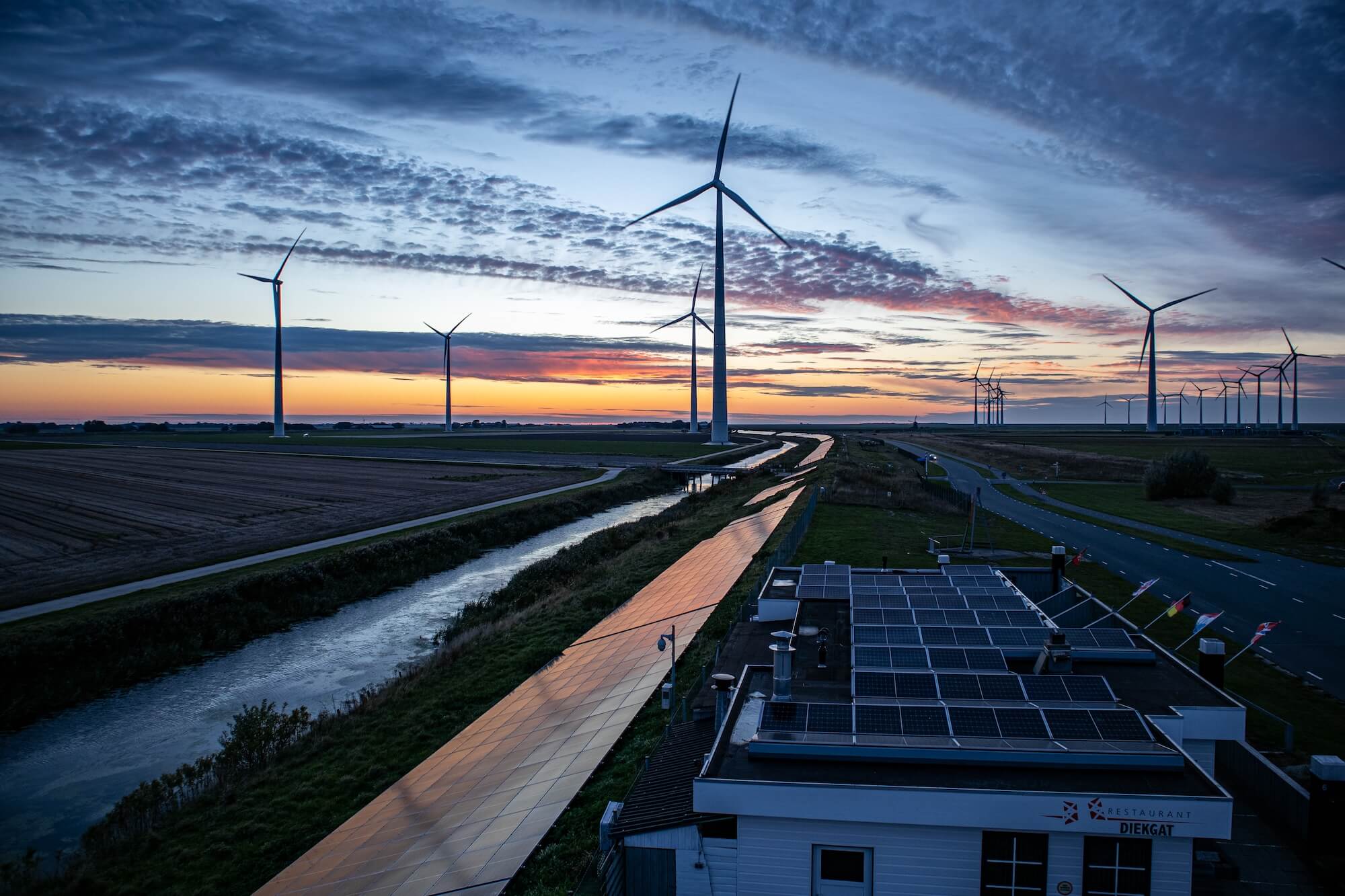
Besides its prominent role in developing wind farms at sea, Groningen Seaports is involved in wind energy on land and in solar energy. On and around the sites of Groningen Seaports, there are nearly two hundred wind turbines and the ports house several solar parks.
By taking part in projects with solar and wind energy, Groningen Seaports makes an active contribution to improving the sustainability of energy production. Green energy is a perfect fit with the ambitions of Groningen Seaports as EnergyPort and it is required for the production of green hydrogen. Groningen Seaports works hard to scale this up, and is setting the course to a future of hydrogen.
Hydrogen
Over the past years, the northern Netherlands has focused on developing a hydrogen ecosystem. It has received European recognition, and is now regarded as the leading Hydrogen Valley in Europe: a fully fledged ecosystem of green hydrogen, from production and transport to use in industry, mobility, and the developed environment.
The unique characteristics of the northern Netherlands contribute: a large potential of large-scale wind power, sufficient production sites, an existing gas infrastructure, access to the market, and knowledge and experience of gas transport and trade.
Biobased raw materials and biogas
Approximately 75% of current energy consumption in Europe comes from molecules, from gases. A large part of this is expected to be electrified, but a large number of molecules will have to remain energy carriers because of cost price, space, technology, infrastructure, and logistics. Sustainable molecules are seen as the key to the energy transition and will provide the renewable energy that is so badly needed. Sustainable biogas will be a relatively easy energy carrier, as it is comparable to current forms of energy and energy systems. Therefore, we attract suppliers of biogas who are able to reuse organic material from the port area (waste/ ship-generated waste/ organic material) for sustainable energy or other useful applications, because the port area of Delfzijl is extremely well suited to the storage and transshipment of biobased raw materials and biogas production.
The region has large network of specialised businesses in logistics services and there are purchasers. The port also has an extensive infrastructure over land and sea and the region has a large network of pipes with sufficient capacity. There is also a lot of room available for the construction of factories and there are opportunities for production expansion and upgrading to other raw materials for the chemical industry.
Benefits of biogas:
CCU/CCS
Carbon Capture Utilisation (CCU) is an innovative technology that captures carbon dioxide (CO₂) and converts it into useful products. This process is a promising solution for reducing CO₂ emissions and contributes to a more sustainable future. In our Delfzijl management area, there are already several players in the CCU ecosystem. The production and reuse of CO2 are two important processes.
CCU Fieldlab
The CCU Fieldlab was founded in 2025 and is located at the Chemport Innovation Center (CIC). The CCU Fieldlab focuses on commercialising CCU technologies and encouraging new business. By developing and implementing these technologies, we can create new production and export opportunities. This provides businesses with the opportunity to make the most of the economic benefits of CCU.
Carbon Capture Utilisation (CCU) is an innovative technology that captures carbon dioxide (CO₂) and converts it into useful products. This process is a promising solution for reducing CO₂ emissions and contributes to a more sustainable future. In our Delfzijl management area, there are already several players in the CCU ecosystem. The production and reuse of CO2 are two important processes.
CCS
CCS is an abbreviation of Carbon Capture and Storage. In short, CCS means the capture and permanent storage of CO2 (carbon dioxide). After burning or gassing fossil fuels, such as natural gas or oil, you create flue gas. This gas is captured in a system, where the CO2 is separated from other gases. The CO2 is transported via pipes or by ship. The CO2 gas is often compressed or cooled, which liquefies the CO2, making it more efficient to transport the CO2 gas. Gasunie and Vopak together are studying the possible development of a CO2 hub for transport in Eemshaven.
By using CCS as an intermediate step, there is more time to work on sustainable solutions for climate-neutral business operations. The capture and storage of CO2 is an essential, temporary transition technology in the energy transition. CCS is a tried-and-tested technology, but its storage in empty gas fields is relatively new. It is still subject to a great deal of additional research. However, it is clear that CO2 can be stored safely under the North Sea. This has been happening in Norway since 1996.
Contact us
For questions or more information about energy

Gielis Stuart
Business manager renewable energy