
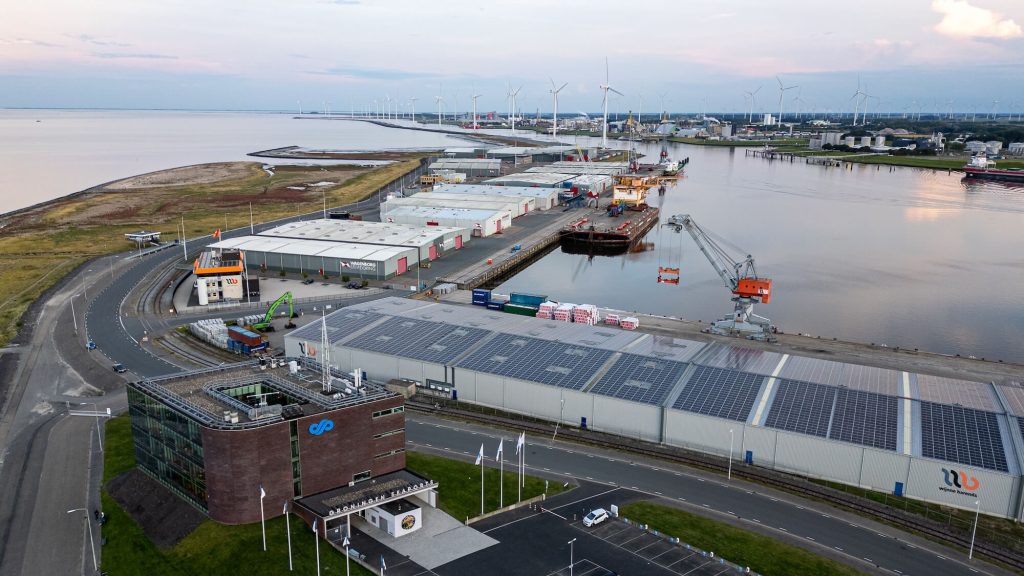
With more than 100 employees, Groningen Seaports works on the sustainable, economic, and social development of the region. Groningen Seaports has two directors: a CEO and a CFO. Daily management is in the hands of the executive team with support from members of the management team.
Organisation structure
Since 14 June 2013, Groningen Seaports has been a state company that is covered by the rules of private law. The new government company comprises a general meeting of shareholders, a supervisory board, and an executive team.
The executive team, consisting of Bart Jan Hoevers (CEO) and Marieke Boekhold-Miltenburg (CFO), are accountable to the five members of the supervisory board. Daily affairs are managed by the executive team.
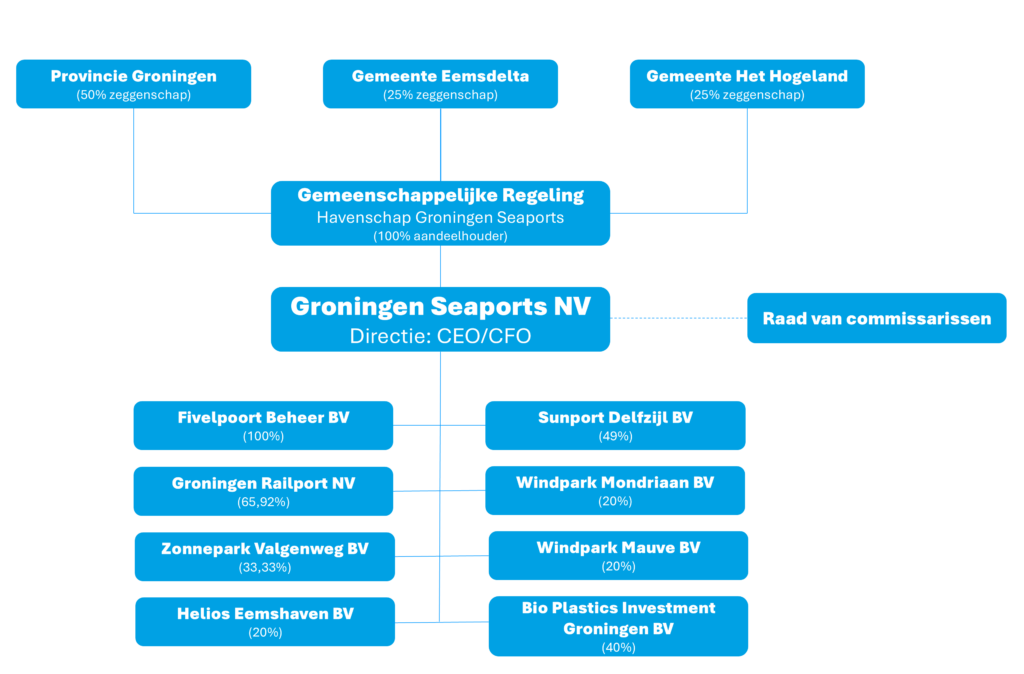
The Gemeenschappelijke Regeling Havenschap Groningen Seaports (‘joint arrangement port authority Groningen Seaports’ (GR)) is the sole shareholder of Groningen Seaports NV. As of 1 January 2025, the GR consists of the executive councils of the province of Groningen, Eemsdelta council, and Het Hogeland council.
Legal structure
CEO

Mr B.J. Hoevers
CFO

Mrs M. Boekhold-Miltenburg
Supervisory Board
Secretary to the Supervisory Board/Executive secretary
Gemeenschappelijke Regeling havenschap Groningen Seaports
The following members constitute the board of the Gemeenschappelijke Regeling:
On behalf of the Groningen provincial executive
On behalf of Eemsdelta council
On behalf of Het Hogeland council
Secretary GR
Meeting dates and documents of the Board of Directors
2025
– List of adopted Executive Board decisions (of 28 November 2025)
– List of decisions GSP Executive Board meeting (of 17 October 2025)
– List of adopted Executive Board decisions (of 11 July 2025)
– List of adopted Executive Board decisions (of 20 June 2025)
– 11 July (agenda and documents)
– List of adopted Executive Board decisions (of 11 April 2025)
2024
–20 December (agenda and documents)
– 18 October (agenda and documents)
–12 July (agenda and documents)
–17 May (agenda and documents)
2023
–22 December (agenda and documents)
–13 October (agenda and documents)
–14 July (agenda and documents)
–12 May (agenda and documents)
–10 March (agenda and documents)
2022
–16 December (agenda and documents)
–14 October (agenda and documents)
–8 July (agenda and documents)
–17 June (agenda and documents)
–29 April (agenda and documents)
–18 March (agenda and documents)
2021
–17 December (agenda and documents)
–14 October (agenda and documents)
–8 September (agenda and documents)
–2 July (agenda and documents)
–30 April (agenda and documents)
2020
–18 December (agenda and documents)
–23 October (agenda and documents)
–25 June (agenda and documents)
–7 May (agenda and documents)
2019
–16 December (agenda and documents)
–17 October (agenda and documents)
–11 July (agenda and documents)
–27 June (agenda and documents)
–15 March (agenda and documents)
2018
–17 December (agenda and documents)
–18 October (agenda and documents)
–12 July (agenda and documents)
–28 June (agenda and documents)
2017
–20 December (agenda and documents)
–19 October (agenda and documents)
–13 July (agenda and documents)
–29 June (agenda and documents)
–11 May (agenda and documents)
2016
–8 December (agenda and documents)
–25 October (agenda and documents)
–22 June (agenda and documents)
–25 April (agenda and documents)
2015
–18 December (agenda and documents)
–1 October (agenda and documents)
–2 July (agenda and documents)
2014
–19 December (agenda and documents)
–4 July (agenda and documents)
2013
–20 December (agenda and documents)
–14 June (agenda and documents)
2012
–21 December (agenda and documents)
–9 November (agenda and documents)
–12 July (agenda and documents)
2011
–16 December (agenda and documents)