You are here: Home | For the local community | About the ports | Delfzijl
Delfzijl port and industrial area
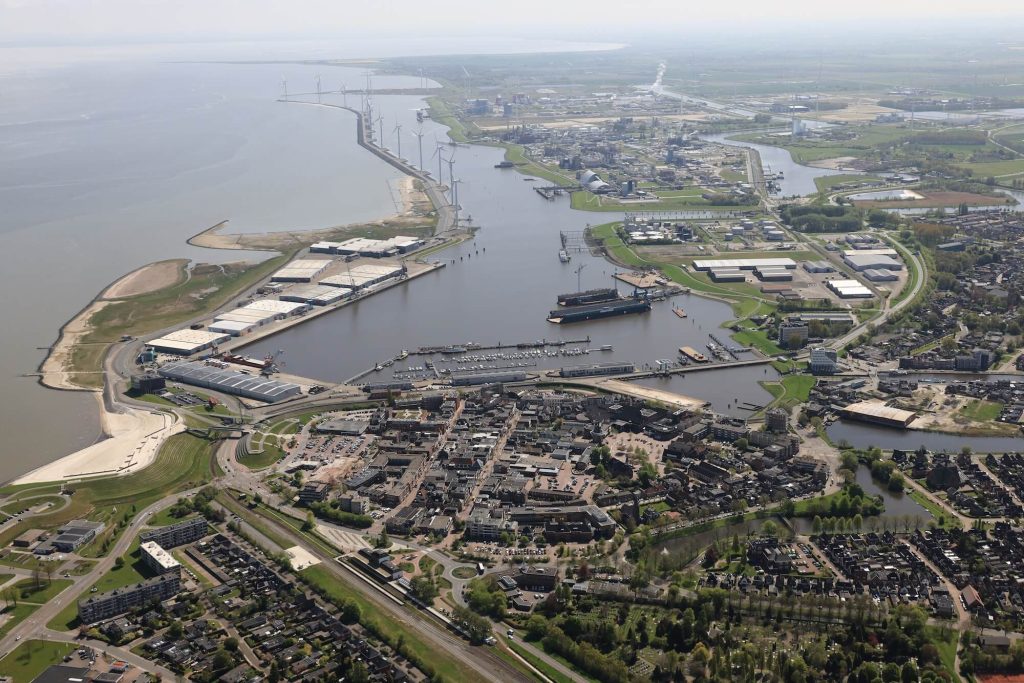
Around 15% of all the chemical products that are produced in the Netherlands come from Delfzijl. After the discovery of gas and salt in the region in the 1950s, Delfzijl became an industrial port with a strong chemical cluster.
The chemical companies are linked in a chain and use each other’s products. With the green energy mix provided by wind turbines, biomass, and hydropower, and the opportunities offered by the agricultural hinterland, Delfzijl is becoming the biobased location in northwest Europe. Waste is increasingly used as a raw material for the chemical sector or is turned into energy. The circular economy plays an important role in Delfzijl, which is rapidly turning into the perfect location for the recycling and waste industry.
Port of Delfzijl
The port of Delfzijl consists of an outer harbour and an inner harbour. Handelshaven is the logistic heart of the port area and is located near the old city centre of Delfzijl. The eastern part of this port is destined for commercial shipping and the western part for recreational shipping.
Handelshaven is accessed via the 6km long Zeehavenkanaal. The north side of this canal consists of a protective dyke, where 14 wind turbines generate green energy. On the Oterdumer Driehoek, there are another 5 wind turbines. On the south side of Zeehavenkanaal, there are various loading and unloading facilities for the purpose of transshipping chemical products or raw materials for the chemical industry.